Fifth Avenue in Midtown Manhattan is one of the most strategically located corridors in New York City, placing guests within walking distance of the Empire State Building, Bryant Park, Rockefeller Center, and the New York Public Library. This guide covers 9 hotels directly on or immediately adjacent to Fifth Avenue, with honest assessments of location advantages, room trade-offs, and booking strategy to help you make a well-informed decision.
What It's Like Staying on Fifth Avenue, New York
Staying on Fifth Avenue puts you at the geographic center of Midtown Manhattan, where nearly every major attraction is reachable on foot. Most landmarks sit within a 10-minute walk, including the Empire State Building, Bryant Park, Grand Central Terminal, and the New York Public Library. The tradeoff is constant pedestrian density - Fifth Avenue handles some of the highest foot traffic in the city, particularly between 34th and 57th Streets, and street noise is a daily reality regardless of floor level.
LaGuardia Airport is around 11 km away, and JFK is roughly 25 km, meaning hotel stays here are built around the city, not airport access. The subway grid here is exceptionally dense, with the B/D/F/M lines at Bryant Park, the 4/5/6 at Grand Central, and the N/Q/R/W at Herald Square all within walking range of most properties on this list.
Pros:
- Walking access to 10+ major Midtown landmarks without needing the subway
- Dense subway coverage from multiple lines within a few blocks
- High concentration of dining, retail, and entertainment within a 5-block radius
Cons:
- Street noise and pedestrian congestion are unavoidable, especially on weekends
- Hotel rates on Fifth Avenue carry a significant location premium year-round
- Midtown crowds make simple tasks like hailing a cab or entering a restaurant slower during peak hours
Why Choose a Hotel on Fifth Avenue, Midtown Manhattan
Hotels on Fifth Avenue span from 3-star properties near Herald Square to 4-star and boutique options closer to Bryant Park and Rockefeller Center. The price gap between a 3-star and a 4-star property on this stretch can exceed $150 per night during peak season, but the location advantage remains consistent across categories - you are paying for proximity, not just amenities. Room sizes in Midtown Manhattan are compact by global standards; even at 4-star level, standard rooms rarely exceed 30 square meters, and guests who prioritize space over location will find better value in Midtown West or the Upper East Side.
What distinguishes Fifth Avenue hotels from comparable options in Chelsea or the Financial District is the immediate walkability to flagship retail and cultural institutions - Saks Fifth Avenue, Bergdorf Goodman, the MoMA, and St. Patrick's Cathedral are all within a short walk. For travelers whose itinerary is Midtown-heavy, the time saved on daily commuting justifies the rate premium. Business travelers benefit from proximity to Grand Central's commuter rail and the concentration of corporate offices along Park and Madison Avenues.
Pros:
- Midtown-heavy itineraries become fully walkable, eliminating daily subway dependence
- Multiple hotel categories available on one corridor, from 3-star to boutique luxury
- Business travelers gain direct access to Grand Central and Midtown office clusters
Cons:
- Standard rooms are compact - around 25-28 square meters at most mid-range properties
- Premium pricing is consistent year-round with limited low-season windows
- Higher foot traffic and noise make lower-floor rooms significantly less comfortable
Practical Booking & Area Strategy for Fifth Avenue Hotels
The best-positioned hotels on Fifth Avenue cluster between 34th Street near Herald Square and 44th Street near Bryant Park - this corridor gives guests walking access to both the Empire State Building to the south and Rockefeller Center to the north without requiring a subway ride. Properties closer to 57th Street lean toward luxury retail and higher rates, while those near 34th Street offer better value with only marginally longer walks to Midtown's core attractions.
Book at least 6 weeks in advance for stays during September-November (UN General Assembly, NYC Marathon, Fashion Week) and late December, when Midtown hotel rates spike sharply. The Bryant Park area sees significant evening activity year-round, with the park itself hosting the Holiday Market from late October through January - a genuine draw but also a source of additional evening congestion. Rooms on higher floors facing west or north provide city views and meaningfully reduce street noise, which is worth requesting at booking. LaGuardia Airport connects to Midtown via the M60 bus to 125th Street and the subway, or by taxi in around 30 minutes outside rush hour - manageable for a one-time airport transfer but not a reason to choose this area over others.
Best Value Hotels on Fifth Avenue
These 3-star properties deliver strong Midtown positioning at rates that sit below the area's boutique and upper-tier options, making them practical choices when the priority is location over on-site amenities.
-
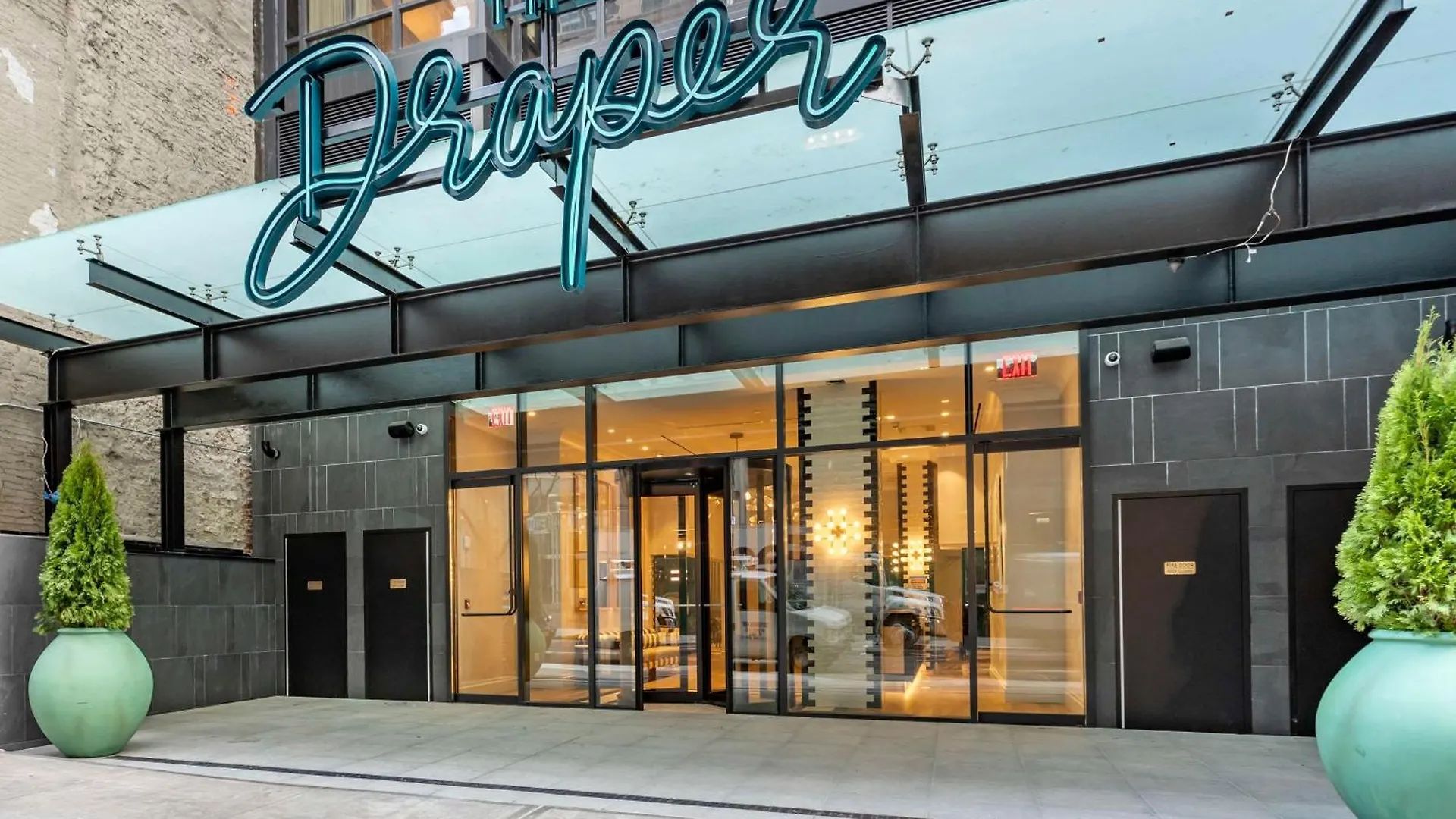
1. The Draper New York, Tapestry Collection By Hilton
Show on map


 Check-infrom 15:00 until 23:59Check-outuntil 11:00
Rooms filling fast – secure the best rate!
fromUS$ 140
-
2. Hilton Club The Central At 5Th New York
Show on map


 Check-infrom 16:00 until 23:59Check-outuntil 10:00
Just a few rooms left at the best rate!
fromUS$ 421
-
3. U Hotel Fifth Avenue, Empire State Building
Show on map


 Check-infrom 15:00 until 23:59Check-outuntil 12:00
Rooms filling fast – secure the best rate!
fromUS$ 76
-
4. Pestana Park Avenue
Show on map


 Check-infrom 15:00 until 23:59Check-outuntil 11:00
Just a few rooms left at the best rate!
fromUS$ 220
Best Mid-Range & Premium Hotels on Fifth Avenue
These 4-star and boutique properties offer enhanced on-site amenities, stronger design credentials, and positioning within the Bryant Park-Rockefeller Center zone - the most in-demand stretch of Fifth Avenue for leisure and business travelers.
-
5. Park Terrace Hotel
Show on map


 Check-infrom 15:00 until 23:30Check-outfrom 06:00 until 12:00
Hurry – almost gone at this price!
fromUS$ 228
-
6. Hyatt Centric Midtown 5Th Avenue New York
Show on map


 Check-infrom 16:00 until 23:59Check-outuntil 11:00
Hurry – almost gone at this price!
fromUS$ 335
-
7. Nh Collection New York Madison Avenue
Show on map


 Check-infrom 15:00 until 23:59Check-outuntil 11:00
Best price guarantee
fromUS$ 130
-
8. Andaz 5Th Avenue, By Hyatt
Show on map


 Check-infrom 16:00 until 23:59Check-outuntil 11:00
Best price guarantee
fromUS$ 342
-
9. The Langham, New York, Fifth Avenue
Show on map


 Check-infrom 15:00 until 23:59Check-outuntil 12:00
Just a few rooms left at the best rate!
fromUS$ 1029
Smart Travel & Timing Advice for Fifth Avenue Hotels
Fifth Avenue in Midtown Manhattan has no true off-season, but rates and crowd levels vary significantly across the calendar. September through mid-November is the most congested and expensive window, driven by the UN General Assembly, New York Fashion Week, and the NYC Marathon - hotel rates during this stretch can run around 40% above standard rates, and availability at well-reviewed properties disappears fast. Late January through early March is the most practical low-demand window: post-holiday foot traffic drops noticeably, rates soften, and the same Fifth Avenue landmarks remain fully accessible without summer or autumn crowds.
For the Bryant Park Holiday Market (late October through early January), expect elevated pedestrian density around the 40th-42nd Street blocks daily until 8 PM and on weekends until 9 PM - something to factor into room selection if noise sensitivity matters. Book at least 6 weeks out for any stay between May and November, and prioritize properties that include breakfast or a complimentary minibar if you want to reduce the daily cost of eating in one of the most expensive dining zones in the city. A minimum 3-night stay makes sense logistically given Midtown's density of attractions - fewer than 3 nights rarely allows guests to cover the core sights without feeling rushed.